1. Lesson Objective
Congratulations! You have written, edited, and polished your story. Now, what? In this final lesson, we will demystify the publishing industry. Whether you want to see your book in a bookstore or manage your own career online, we will explore the paths available to you.
2. What You Will Learn
- The pros and cons of Traditional Publishing vs. Self-Publishing.
- What a Literary Agent does and how to get one (The Query Letter).
- The basics of formatting and cover design.
- How to handle rejection and keep writing.
3. Required Knowledge or Tools
You need a finished manuscript. Do not query agents with an unfinished book. You also need a thick skin—rejection is part of the business.
4. Core Concept Explanation
The Two Paths
Traditional Publishing: You sell the rights to your book to a publisher (like Penguin Random House). They pay you an advance and handle editing, cover design, and distribution.
Gatekeepers: Agents and Editors.
Speed: Slow (18-24 months).
Self-Publishing (Indie): You act as the publisher. You hire the editor and cover artist. You upload to Amazon/KDP. You keep all the rights and higher royalties.
Gatekeepers: None (except the market).
Speed: Fast (as soon as you are ready).
5. Why This Lesson Matters
Writing is an art; publishing is a business. To succeed, you must wear both hats. Understanding the industry protects you from scams (never pay an agent!) and helps you make informed decisions about your career goals.
6. Step-by-Step Tutorial: The Query Letter
If you choose the traditional route, you need a Query Letter. It is a one-page sales pitch to an agent.
Paragraph 1: The Hook
Title, Word Count, Genre. "I am seeking representation for THE DARK TOWER, a 80,000-word Fantasy novel."
Paragraph 2: The Pitch
Who is the protagonist? What do they want? What stands in their way? What happens if they fail? (See Lesson 3 & 5!). Keep it to 200 words.
Paragraph 3: The Bio
Short and professional. Mention any previous publications. If you have none, that's fine.
7. Visual Explanation
The image below illustrates the fork in the road facing every modern author.
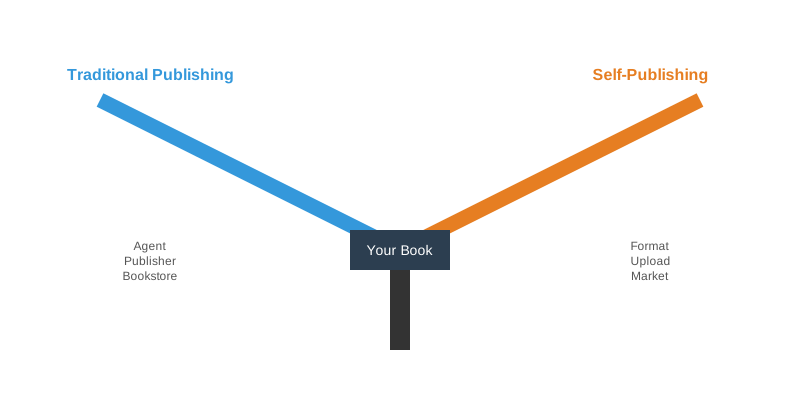
Neither path is "better." It depends on your goals. Do you want prestige? Go Traditional. Do you want control? Go Indie.
8. Common Mistakes and Misunderstandings
- "Self-Publishing is for failures": False. Many indie authors earn six figures. The movie "The Martian" started as a self-published blog.
- "Agents steal ideas": No, they don't. They are too busy trying to sell finished books. Ideas are cheap; execution is everything.
- Paying to Publish: This is a "Vanity Press." Avoid them. Money should flow to the author, not from the author.
9. Practical Example or Scenario
Scenario: You have a niche book about "Underwater Basket Weaving Zombies."
Analysis: A big publisher might reject this because the audience is too small. However, you might find 5,000 die-hard fans online who would buy it. This project is perfect for Self-Publishing.
Scenario: You have the next "Harry Potter."
Analysis: This has mass appeal. A traditional publisher can get this into Wal-Mart and airports. This project might benefit from Traditional Publishing.
10. Lesson Summary
In this final lesson, we explored the business side of writing. We learned that there is no single "right way" to publish. We discussed the importance of the Query Letter and warned against vanity scams.
Course Conclusion: You have completed the glampik! You started with an idea, built a world, populated it with characters, structured a plot, and polished the prose. You are now a writer. The only thing left to do is... write the next one.