1. Lesson Objective
A story cannot happen in a vacuum. It needs a "where" and a "when." In this lesson, we will learn how to build immersive worlds—whether it's a fantasy kingdom or a small apartment in New York—that feel tangible and lived-in. We will treat the setting not just as a backdrop, but as a character in itself.
2. What You Will Learn
- The difference between Macro Setting (World) and Micro Setting (Scene).
- How to engage all five senses to create immersion.
- Techniques for weaving exposition into the narrative without boring the reader.
- How setting influences character behavior and plot.
3. Required Knowledge or Tools
You need your character from the previous lesson. Where do they live? Does their environment support them or challenge them?
4. Core Concept Explanation
Setting as Character
Think of the Overlook Hotel in The Shining or Gotham City in Batman. These aren't just places; they have personalities. They affect the mood of the story. A sunny park dictates a different kind of conversation than a dark alleyway. Your setting should exert pressure on your protagonist.
The Five Senses
Novice writers rely heavily on sight. "The room was blue. The table was wood." This is flat. To make a scene pop, you must use:
Sound: The hum of the refrigerator.
Smell: The scent of stale coffee and bleach.
Touch: The sticky residue on the table.
Taste: The metallic tang of fear in the mouth.
5. Why This Lesson Matters
If a reader cannot visualize where the characters are, they become disoriented. This is often called "White Room Syndrome"—where characters float in a featureless void. Grounding the reader in a physical space makes the emotional stakes feel real. When we can smell the smoke, we believe the fire.
6. Step-by-Step Tutorial: Building a Room
Pick a location important to your story. Now, layer the details.
Step 1: The Broad Strokes (Visuals)
What is the first thing someone notices when they walk in? The clutter? The sterility? The size?
Step 2: The Atmosphere (Mood)
Is it welcoming or hostile? Use lighting and temperature to set the mood. "The fluorescent lights hummed with a headache-inducing flicker."
Step 3: Specificity (The "Telling" Detail)
Don't list everything. Pick one specific detail that implies the rest. Instead of saying "The house was messy," say "There was a half-eaten pizza from three days ago on the stereo." This tells us about the character's hygiene, laziness, and lifestyle in one image.
7. Visual Explanation
The image below demonstrates how different sensory inputs combine to create a complete picture of a world.
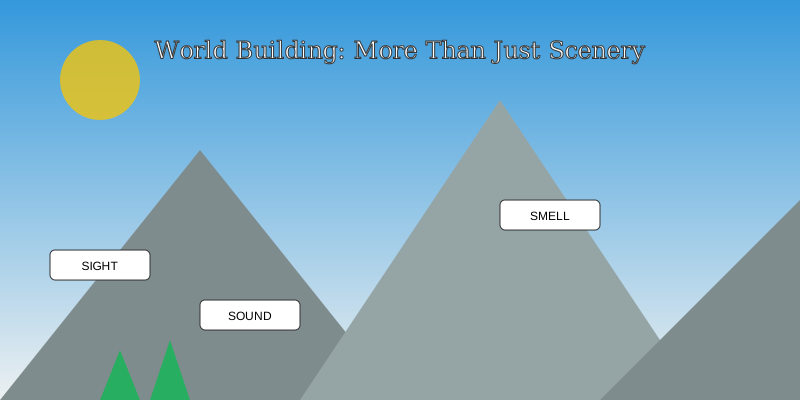
Just as a painting has foreground and background, your writing needs foreground details (what the character touches) and background atmosphere (the weather, the politics).
8. Common Mistakes and Misunderstandings
- The Info Dump: This is when the author stops the story to explain the history of the kingdom for three pages. Don't do this. Weave the history into the action. Show us the statue of the fallen king; don't read us his biography.
- Over-Description: We don't need to know every item on the shelf. Give the reader a few key details and let their imagination fill in the rest.
- Inconsistent Rules: If you establish that magic drains energy, your hero cannot cast a hundred spells without passing out. Consistency creates believability.
9. Practical Example or Scenario
Boring Description: "It was a cold day. He walked down the street. It was raining."
Immersive Description: "The wind bit through his thin coat, seeking out the gaps in the fabric. Puddles reflected the neon signs of the strip mall, distorted by the relentless drizzle. The air smelled of wet asphalt and exhaust fumes."
The second example makes you feel the cold and smell the city.
10. Lesson Summary
In this lesson, we learned that setting is more than just a backdrop; it is an active force in the story. We practiced using the five senses to create immersion and discussed the importance of "showing" the world through action rather than "telling" it through info dumps.
Homework: Go to a public place (a cafe, a park, a library). Sit for 10 minutes and write down only what you hear and smell. Do not write about what you see. Then, write a scene set in that location using those details.